

In today’s saturated marketplace, social proof stands as a silent yet powerful force that guides consumer choices. It leverages the collective actions and opinions of others to validate decisions, offering buyers a sense of security amidst countless options.
Whether through online reviews, influencer endorsements, or testimonials, social proof is a cornerstone of modern marketing. This article explores the psychology of social proof, its manifestations in marketing, and strategies for businesses to harness its potential effectively.
Understanding Social Proof in Marketing

Social proof is rooted in human psychology, where people look to others for guidance in uncertain situations. In marketing, this phenomenon is amplified by the accessibility of social media and user-generated content.
For instance, a single positive review or a trending hashtag can sway purchasing decisions by creating a perception of authenticity and trustworthiness.
Key Examples of Social Proof in Action:
- Influencer Marketing: Endorsements by relatable personalities hold more sway than traditional advertisements.
- Statistical Evidence: Metrics like “over 1 million satisfied customers” establish credibility.
- Community Engagement: Visible interaction, such as likes and shares, enhances a product’s appeal.
When businesses utilize these strategies, they tap into the innate human desire for belonging and validation, which drives consumer behavior.
What is Social Proof?
At its core, social proof is a psychological phenomenon where individuals mirror the actions of others to make decisions. This behavior is especially common when navigating unfamiliar choices. Forms of social proof include:
- Reviews and Testimonials: These cultivate trust by showcasing real experiences.
- Influencer Endorsements: Aligning with trusted figures builds credibility.
- User-Generated Content (UGC): Photos, videos, and reviews from real users resonate more deeply than polished ads.
Social proof not only influences individual behavior but also fosters a sense of community, creating a cycle of trust and validation that benefits businesses and buyers alike.
Types of Social Proof
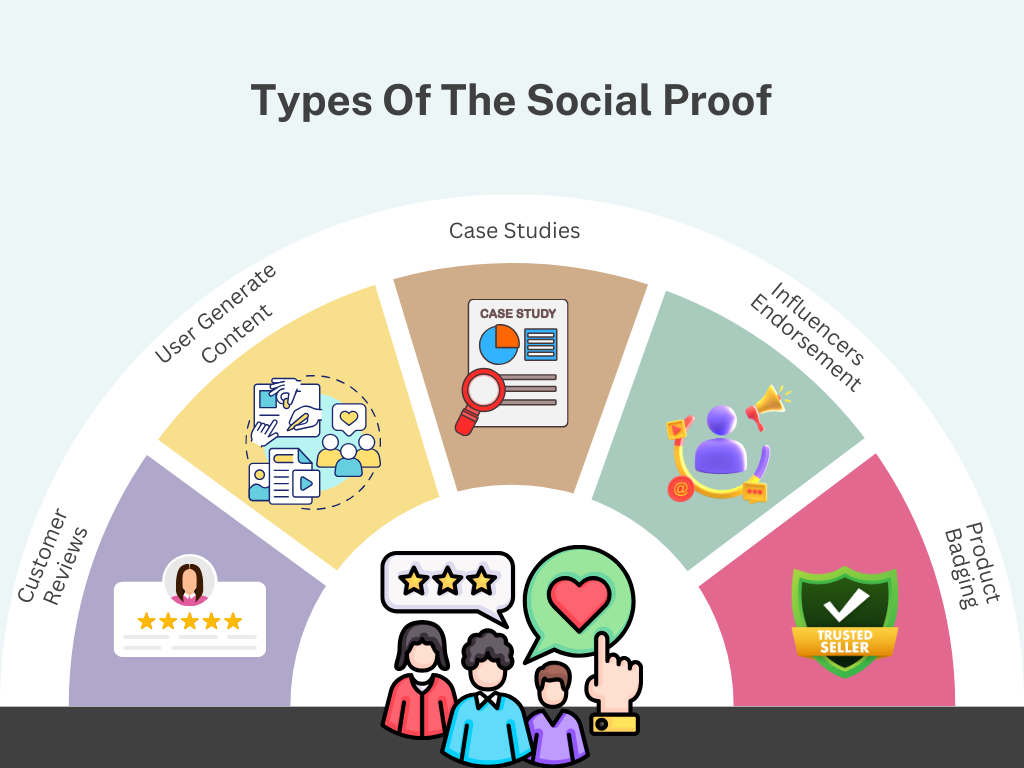
1. Expert Social Proof
Endorsements from industry experts lend authority to a brand. For example, when a dermatologist recommends a skincare product, it enhances the product’s credibility.
2. User-Generated Content
Authentic content, such as photos or reviews shared by users, creates relatability. This type of social proof fosters trust and a sense of belonging among potential buyers.
3. Celebrity and Influencer Endorsements
Endorsements from well-known figures can dramatically increase a brand’s appeal. These endorsements work by associating the product with the celebrity’s image and values.
4. Scarcity Social Proof
Limited stock notices or countdowns create urgency, compelling buyers to act quickly. This form of social proof plays on the fear of missing out (FOMO).
5. Popularity Metrics
Numbers like “Best Seller” or “500K sold worldwide” highlight the product’s acceptance and appeal.
The Psychology Behind Social Proof
Social proof operates on our intrinsic need for belonging. Observing others engaging with a product reassures us of its value, reducing decision-making anxiety.
Psychological theories that underpin social proof include:
- Social Validation Theory: We seek validation from others in uncertain situations.
- Bandwagon Effect: As more people endorse a product, its popularity snowballs, attracting even more buyers.
- FOMO: Seeing others benefit from a product motivates us to follow suit to avoid missing out.
These psychological triggers highlight how social proof shapes decisions in subtle yet compelling ways.
How Reviews Shape Consumer Behavior

Online reviews are a powerful form of social proof, offering insights that resonate deeply with potential buyers. Today’s consumers trust peer reviews more than brand advertisements, valuing authenticity over polished messaging.
Key Aspects of Reviews:
- Credibility: Detailed narratives establish trust and relatability.
- Emotional Connection: Stories of how products solve problems resonate with buyers.
- Community Impact: A network of shared experiences creates a collective sense of validation.
Brands that prioritize genuine reviews not only boost conversions but also foster long-term customer loyalty.
The Power of User-Generated Content
User-generated content (UGC) has redefined modern marketing by giving a voice to consumers. Photos, videos, and testimonials shared by real users add authenticity to a brand’s image.
Benefits of UGC:
- Relatability: Real-world scenarios connect better with buyers.
- Community Building: Shared experiences foster engagement and loyalty.
- Cost Efficiency: Satisfied customers act as brand ambassadors without additional ad spend.
Campaigns like hashtag challenges on social platforms exemplify how UGC drives awareness while establishing trust.
Case Studies: Brands Winning with Social Proof
Airbnb
Airbnb effectively uses user-generated reviews and ratings to establish trust. By showcasing authentic customer experiences, it reassures potential users about the quality of its offerings.
Glossier
Glossier incorporates feedback from its community into product development and marketing. This strategy not only builds trust but also fosters a sense of belonging among its customers.
Both brands highlight the effectiveness of leveraging authentic social proof to build strong, loyal communities.
Strategies to Leverage Social Proof
- Showcase Authentic Testimonials
Highlight detailed customer stories that illustrate how your product has positively impacted lives. - Leverage User-Generated Content
Encourage satisfied customers to share their experiences on social platforms, and feature this content in your campaigns. - Incorporate Data-Driven Proof
Share compelling statistics about your product’s popularity, ensuring transparency and credibility. - Create Urgency with Scarcity
Use time-sensitive promotions or low-stock alerts to compel action.
Common Mistakes to Avoid
1. Overemphasis on Numbers
While impressive, quantitative metrics lack emotional appeal. Balance them with qualitative narratives.
2. Outdated Testimonials
Regularly update your social proof to maintain relevance and credibility.
3. Ignoring Negative Feedback
Addressing criticism transparently can turn potential setbacks into opportunities for building trust.
Social proof is a powerful tool that influences consumer behavior, tapping into psychological needs for belonging and validation. Whether through reviews, endorsements, or UGC, businesses can create trust and drive conversions by leveraging this phenomenon.
For consumers, understanding social proof empowers them to make thoughtful decisions rather than blindly following trends. Ultimately, this balance of influence and discernment leads to more satisfying purchasing experiences.